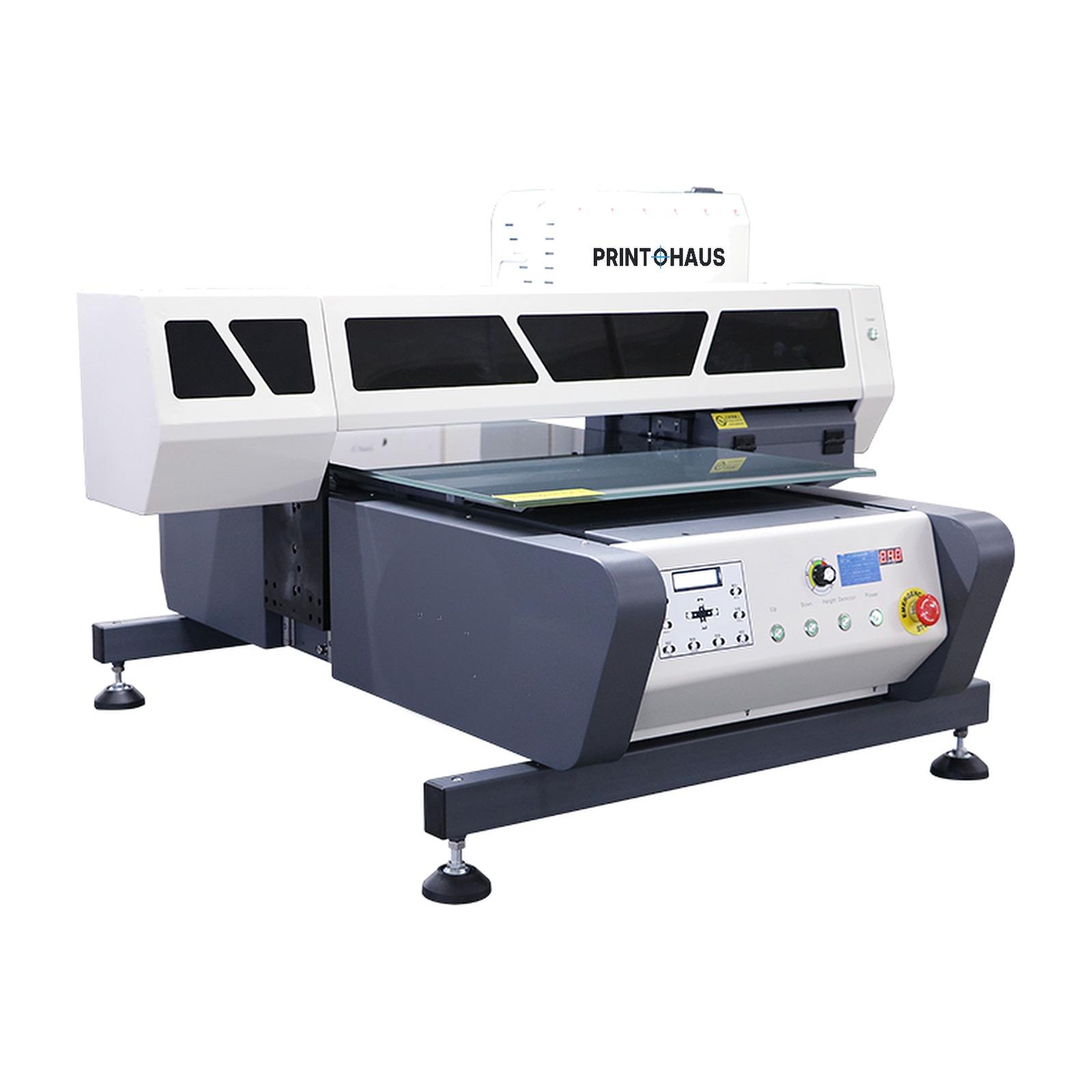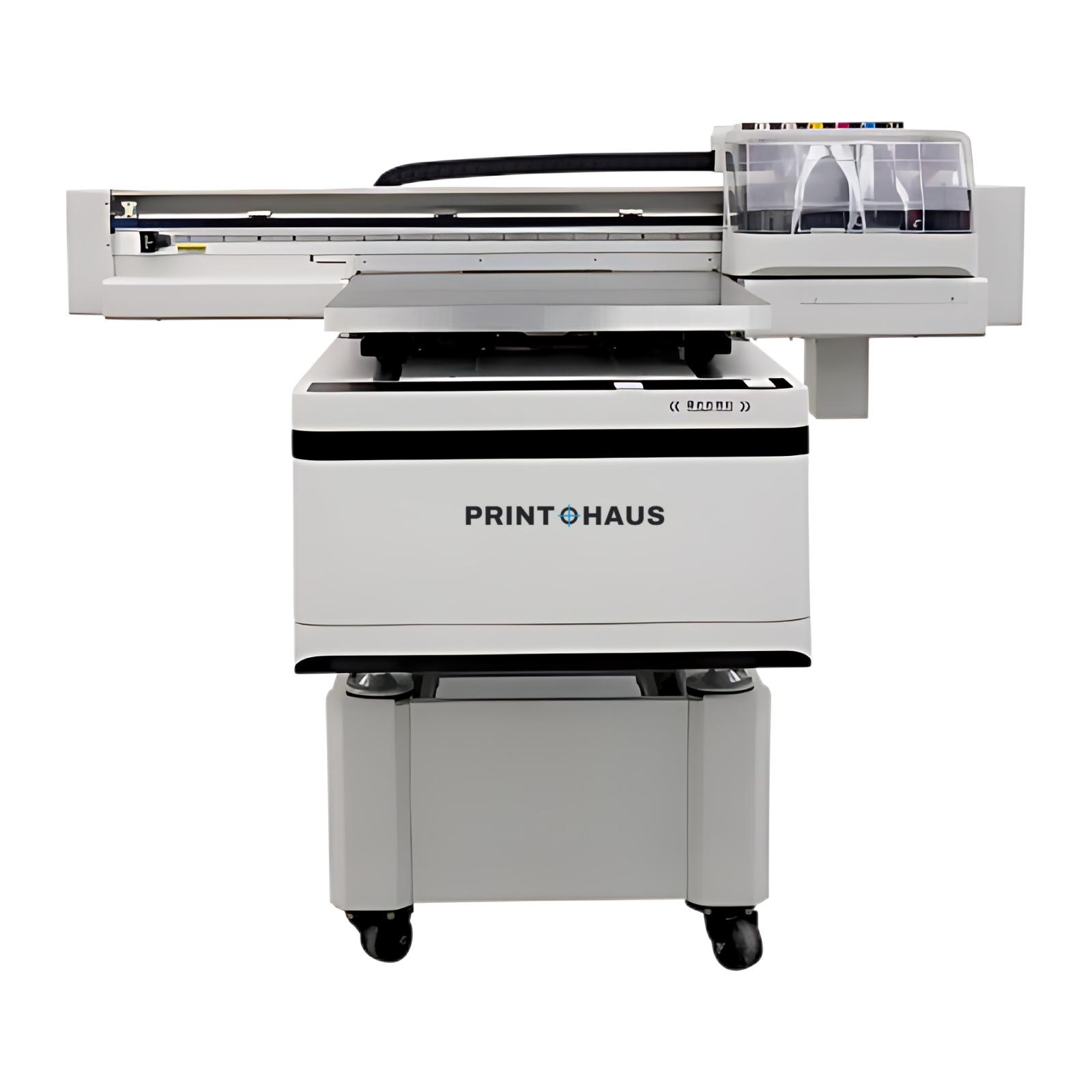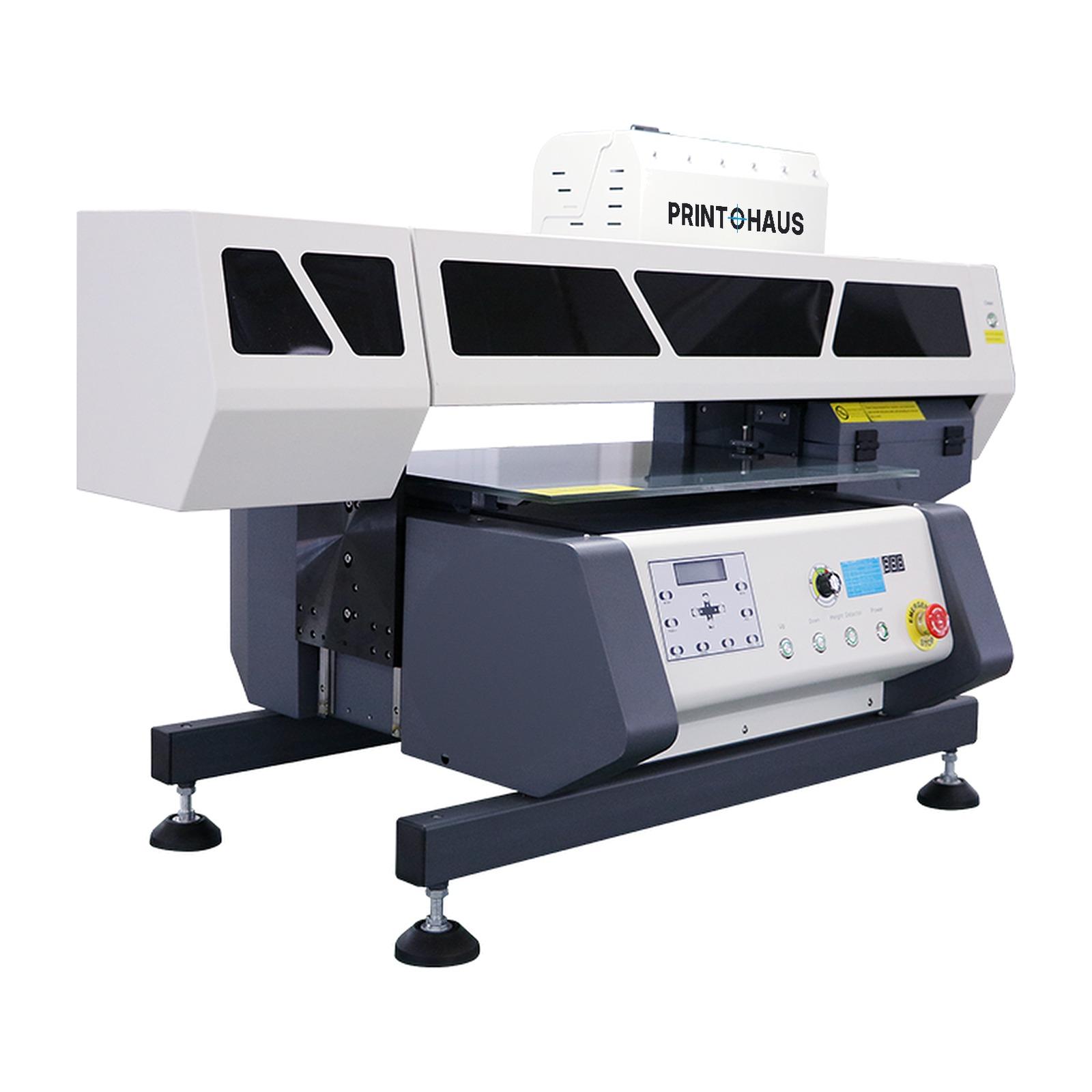
A UV flatbed prints straight onto almost anything hard that fits under its head, and the ink is cured dry the moment it lands. That makes it one of the most flexible machines a personalisation or gift business can own.
Materials
- Acrylic: clear, coloured or mirrored; print the back for a glossy front.
- Wood and MDF: signs, plaques, coasters, puzzles.
- Metal: aluminium business cards, plaques, tags (primer recommended).
- Glass: awards, photo blocks, panels (primer recommended).
- Ceramic and stone: tiles, slate, coasters.
- Plastics: phone cases, pens, USB drives, PVC cards.
- Leather and faux leather: wallets, notebook covers, patches.
20 products shops sell
- Phone cases
- Acrylic signs and wall art
- Awards and plaques
- Wood signs and home decor
- Coasters, wood, slate or ceramic
- Personalised puzzles
- Pet tags and key rings
- Pens and promotional items
- Golf balls (with a jig)
- Business and gift cards in metal or PVC
- Notebook and diary covers
- Ceramic tiles and murals
- Glass photo blocks
- Leather patches for hats and bags
- Name badges
- Wedding and event signage
- Packaging prototypes and boxes
- Guitar picks and accessories
- Laptop and tablet skins
- Bottles and mugs (with a rotary attachment)
Choosing the machine
A 16 × 24 in bed like the PH-UV401 ($9,490 delivered) suits one-offs and short runs. A 24 × 35 in bed such as the PH-UV601 ($11,490) takes full trays of phone cases and whole signs. For thick items and camera placement, the PH-UV631 clears 7.1 in.
For tumblers and curved items in volume, see UV DTF vs UV flatbed.