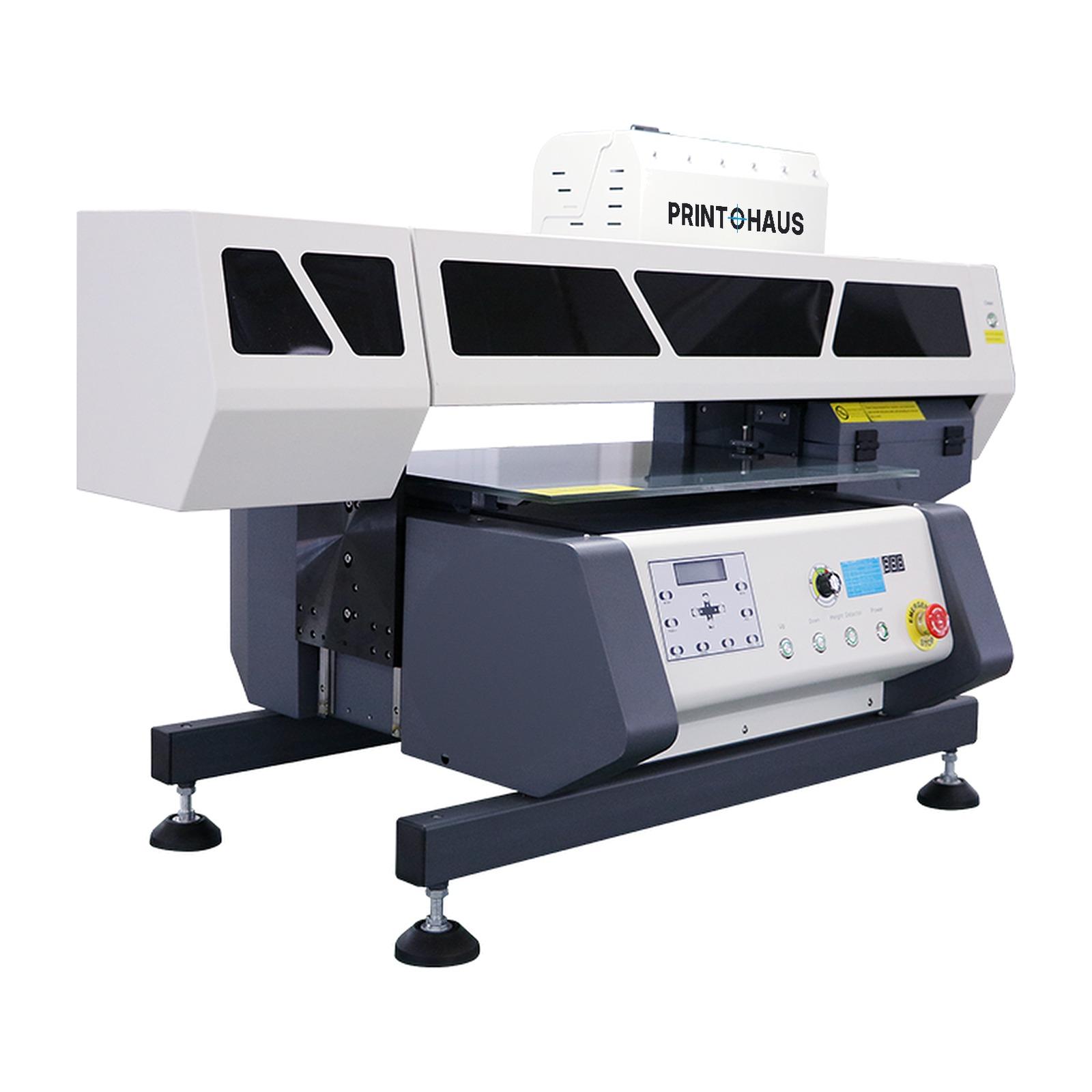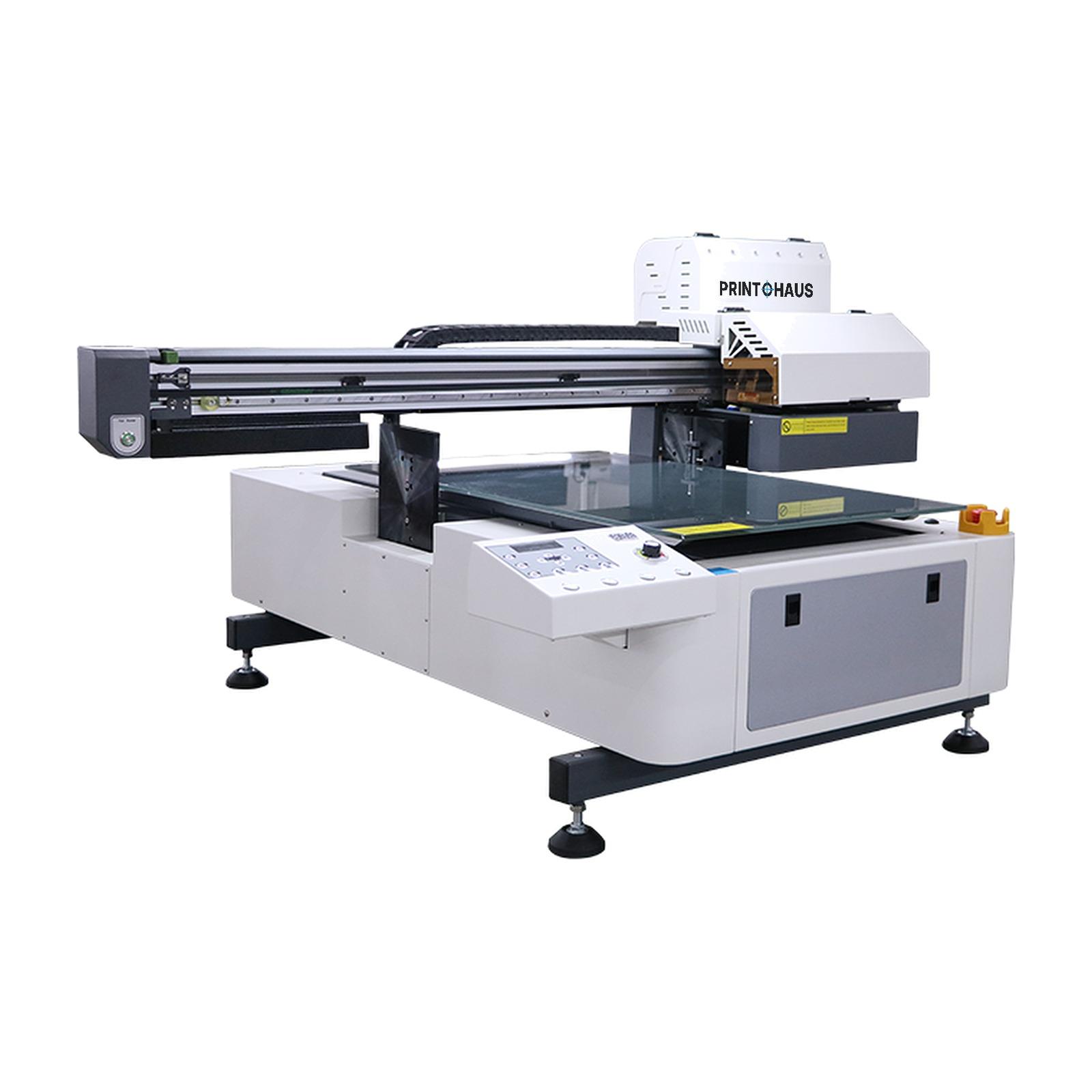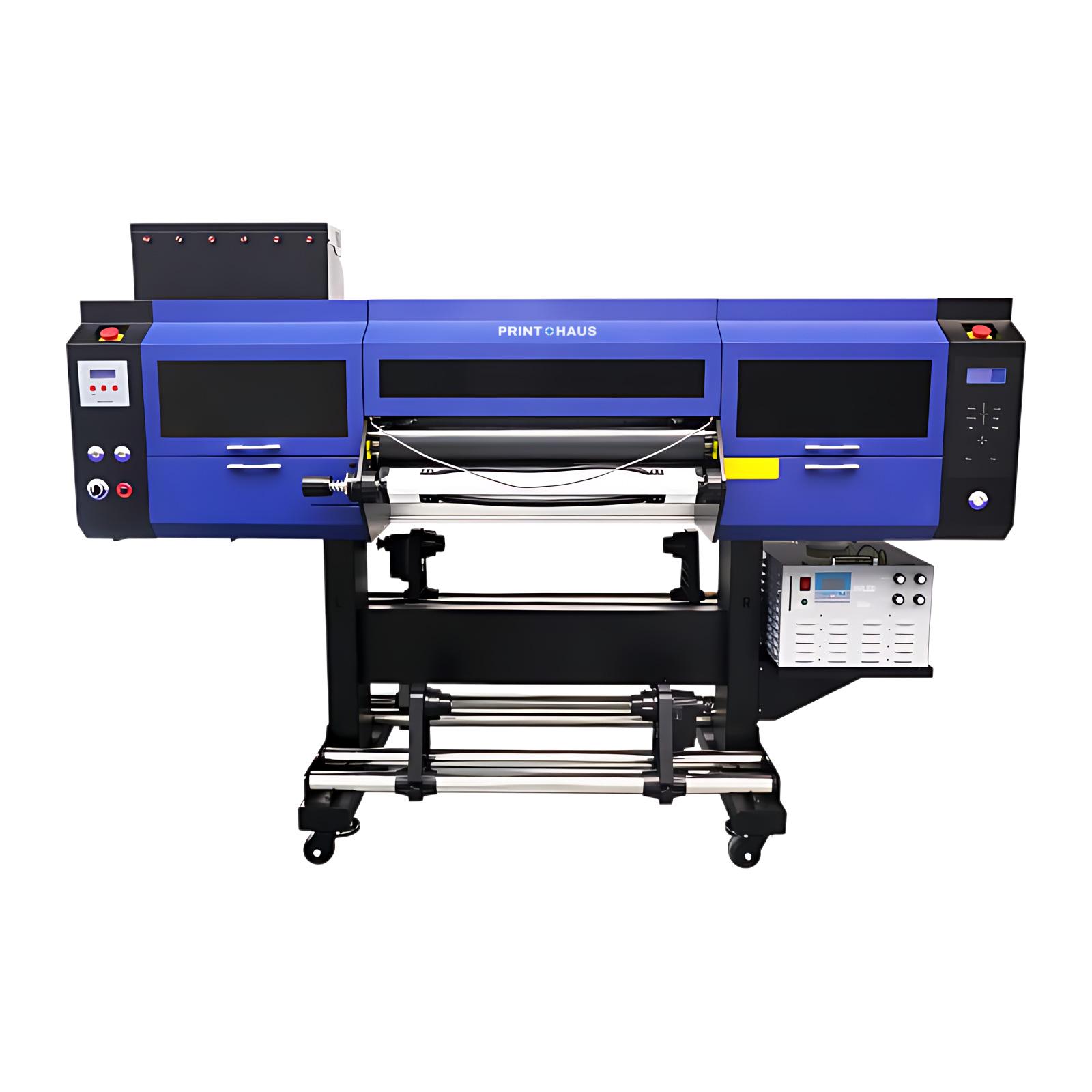
Both machines use UV-curable ink, and both decorate hard goods. The difference is where the ink goes: straight onto the object, or onto a film you apply afterwards.
How each one works
A UV flatbed printer prints straight onto the item. Lay phone cases, acrylic blanks, wood signs or tiles on the bed, and the head lays white, colour and optional varnish, cured by UV light as it prints. The piece comes off finished.
A UV DTF printer prints a sticker-like transfer. White, colour and varnish go onto A film and are laminated to B film in one pass. Peel the backing, press the print onto a tumbler, glass can or box, and it stays, with no backing left behind.
Side by side
| UV flatbed | UV DTF | |
|---|---|---|
| Prints | Directly on the object | On film, applied by hand |
| Best items | Flat or low items: phone cases, signs, awards, tiles, gifts | Curved and awkward items: tumblers, cups, glass cans, packaging |
| Item size | Limited by bed and clearance | Almost any shape you can press a sticker onto |
| Raised and glossy effects | Yes, with varnish | Yes, with varnish |
| Labour per item | Lay out and print | Print, cut, peel and apply |
Which one to choose
- Personalised flat goods and signage: a UV flatbed. The 16 × 24 in PH-UV401 is $9,490 delivered; the two-head 24 × 35 in PH-UV612 is $15,490.
- Tumbler wraps, cup wraps and labels in volume: UV DTF. The 24-inch PH-UVDTF603 prints and laminates in one machine.
- A gift or promo shop doing both: many run one of each. The flatbed does the items that sit flat, the UV DTF printer the ones that do not.