Ask ten print shops for the best DTF printer and you will get ten brand names. A better question is which machine fits the work you will do. Here is what actually decides whether a DTF printer pays for itself in a small business.
1. Print width: 12 inches or 24 inches
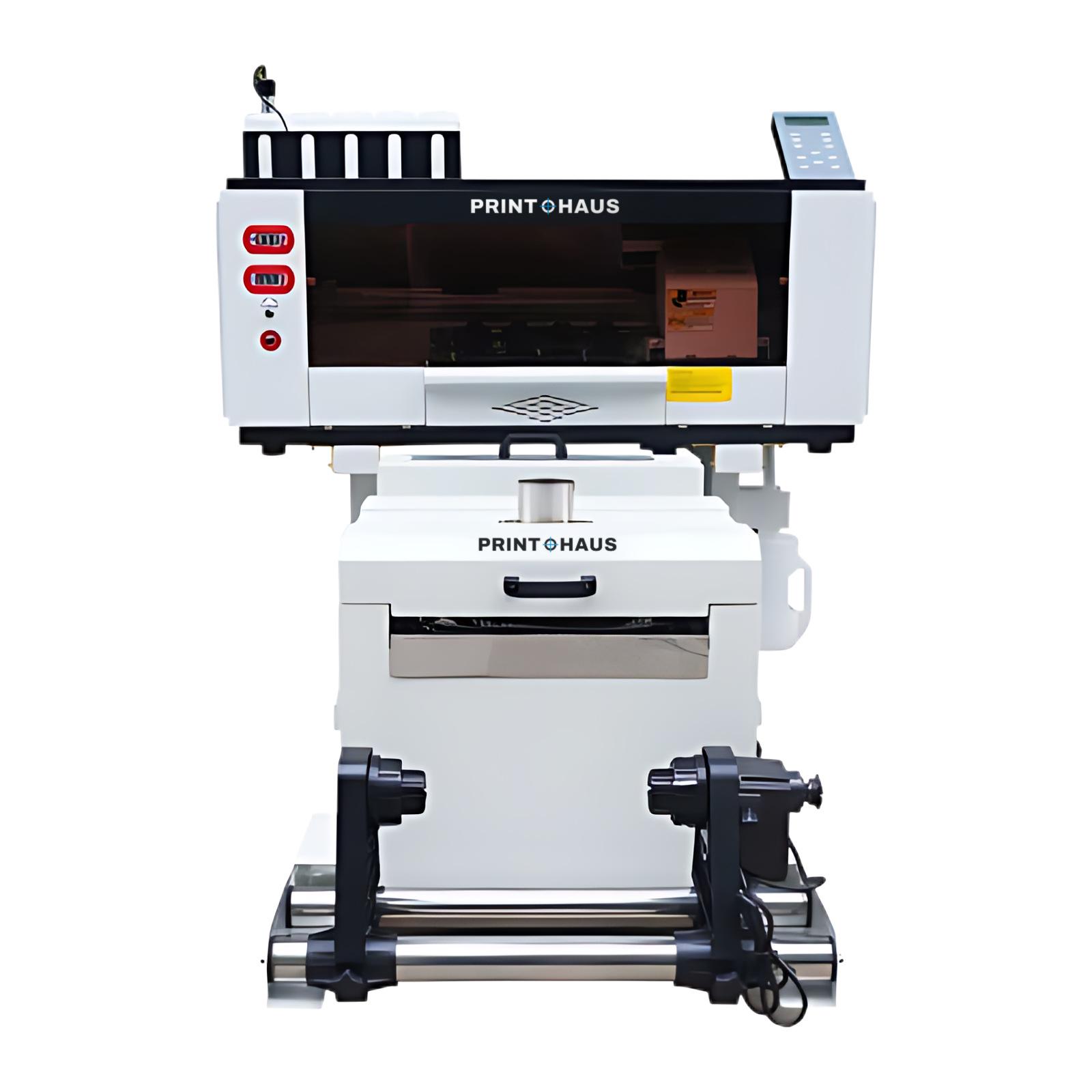
- 12-inch (A3) printers handle any standard full-front design (about 11 × 14 in). They suit brands and shops printing their own garments, a few dozen to about a hundred shirts a day.
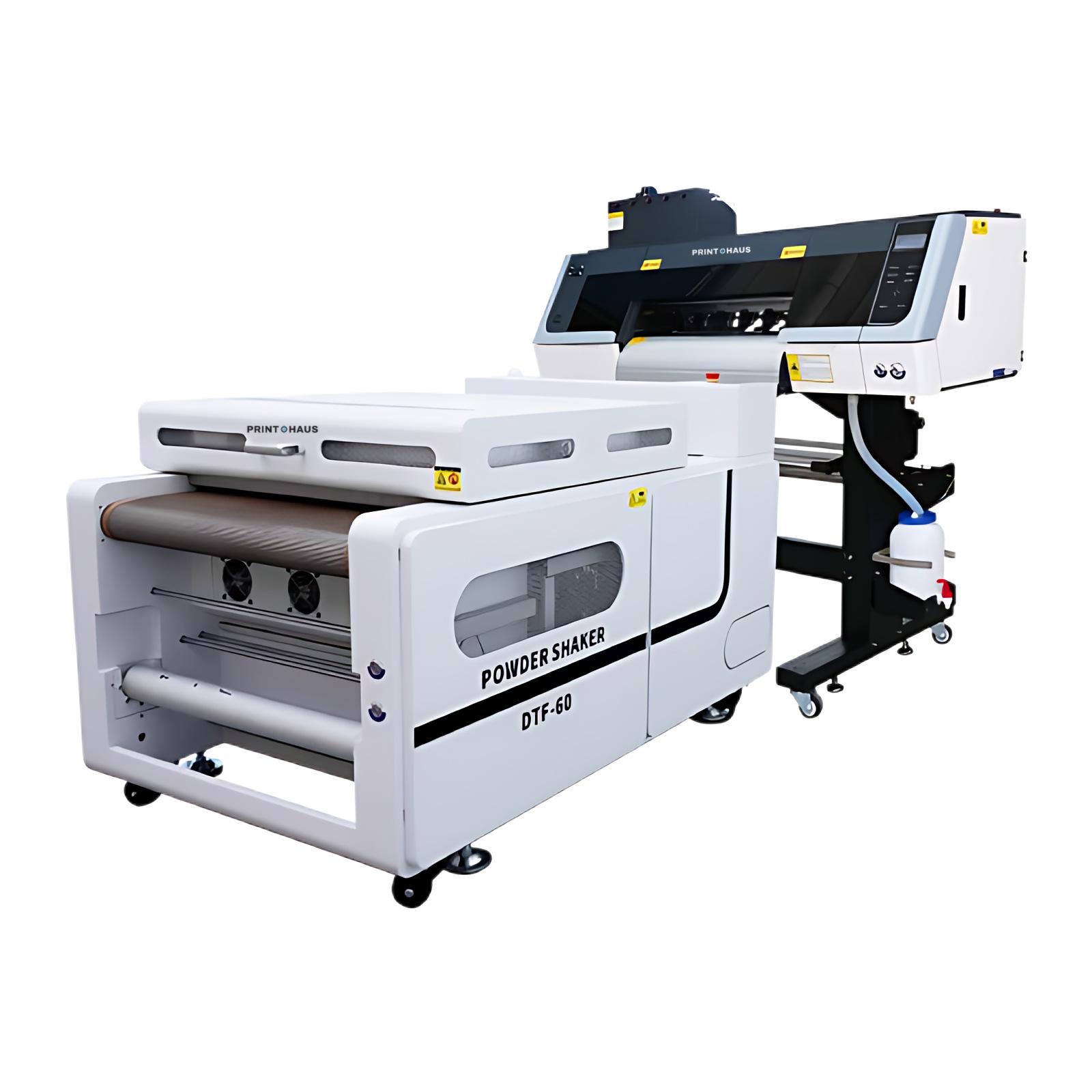
- 24-inch printers carry twice the print area per pass. They are the choice for gang sheets, oversize prints and selling transfers to other businesses.
More detail in our 12-inch vs 24-inch comparison.
2. The printheads
Heads decide speed and reliability. Epson i3200 heads are industrial production heads. Two of them on 24-inch film print around 150 ft² an hour at 4 pass. Epson F1080 heads cost less and print slower. They are a fair way to start if volume is low and budget is tight.
| 2 × i3200 | 2 × F1080 | |
|---|---|---|
| 12-inch speed (4 pass) | up to 75 ft²/h | up to 48 ft²/h |
| 24-inch speed (4 pass) | up to 150 ft²/h | up to 54 ft²/h |
| Best for | Daily production | Low volume, tighter budget |
3. White-ink circulation
White ink is heavy and settles. A business printer needs automatic circulation, stirring and filtering of the white ink. Without it, a weekend off can mean clogged heads on Monday. This one feature matters more than any headline speed figure.
4. An inline powder shaker
The shaker powders, shakes off and cures the film as it leaves the printer. Hand powdering is fine for samples, but it caps how much you can sell. Buy a printer and shaker that are matched in speed and width. An air filter for the curing fumes is a sensible extra.
5. Power and space
Most DTF lines run on 220V. A 24-inch line with its shaker draws several kilowatts, mostly for curing. Check your outlets before you buy. An electrician can add a dryer-style 220V circuit if you have none.
6. Support, training and warranty
A DTF printer is a production tool, and support is part of what you buy. Look for setup and operator training, remote support by video, spare parts from stock, and a clear warranty. Note which parts it excludes. Printheads, wipers and capping stations are wearing parts almost everywhere.
7. The delivered price, not the ex-works price
Many quotes are ex-works (EXW): the machine at the factory gate. Sea freight, customs clearance and US import duty come on top and can add 20–40%. Always compare delivered, duty-paid prices.
Our picks for a small business
- Printing your own garments: the PH-DTF302, a 12-inch line with two i3200 heads, automatic white-ink circulation, a shaker and an air filter, for $7,490 delivered and duty paid. The F1080 version costs $5,490.
- Selling gang sheets as well: the PH-DTF602, a 24-inch line with two i3200 heads and the DF-700W shaker, printing up to 150 ft² an hour, for $11,490 delivered and duty paid.
Both include online setup and training, a 12-month machine warranty and remote support for as long as you own the machine. Want a second opinion? Tell our chat what you print and how many a day, and we will tell you honestly which one fits, or whether DTF is the right process at all. Our DTF vs sublimation vs DTG guide covers that question.