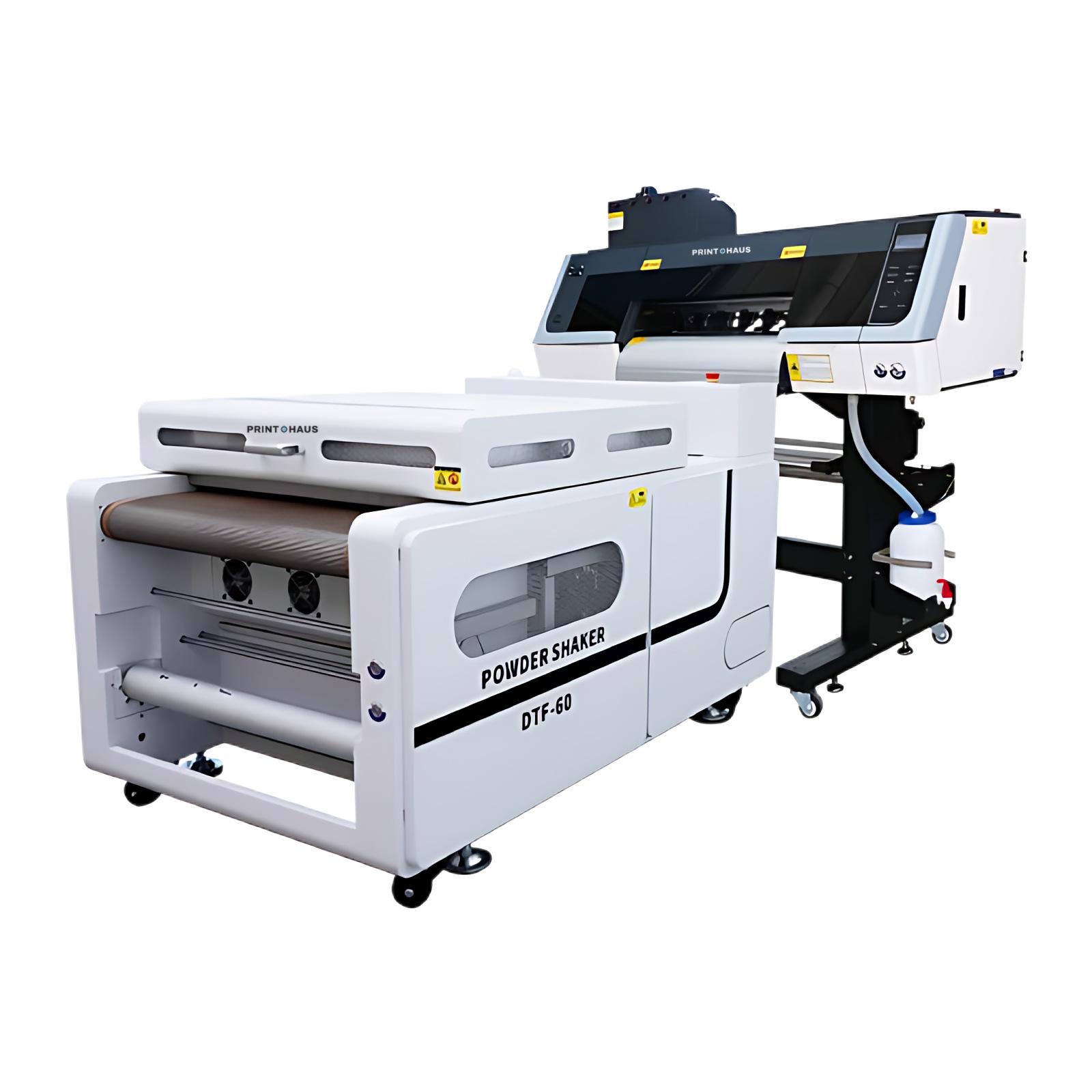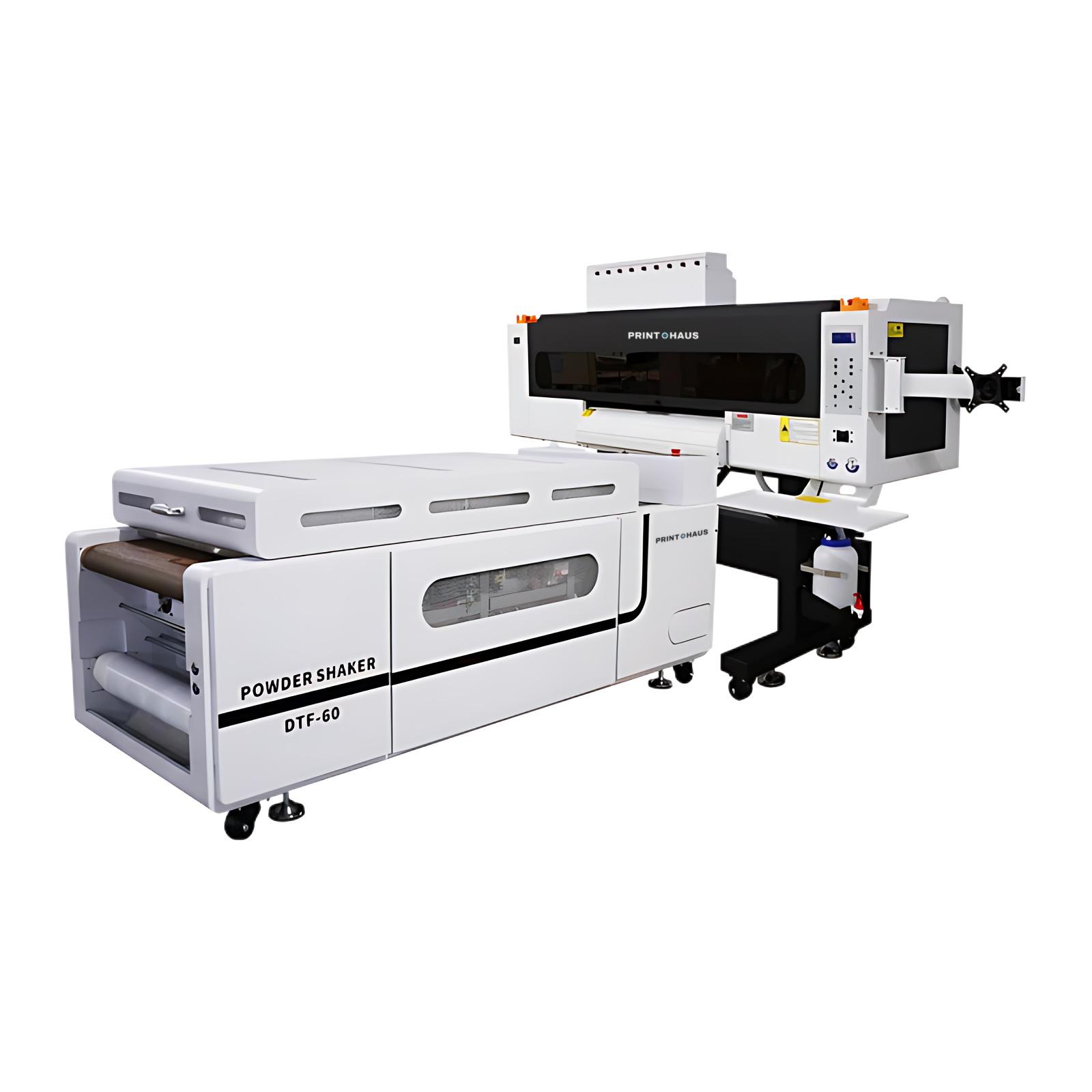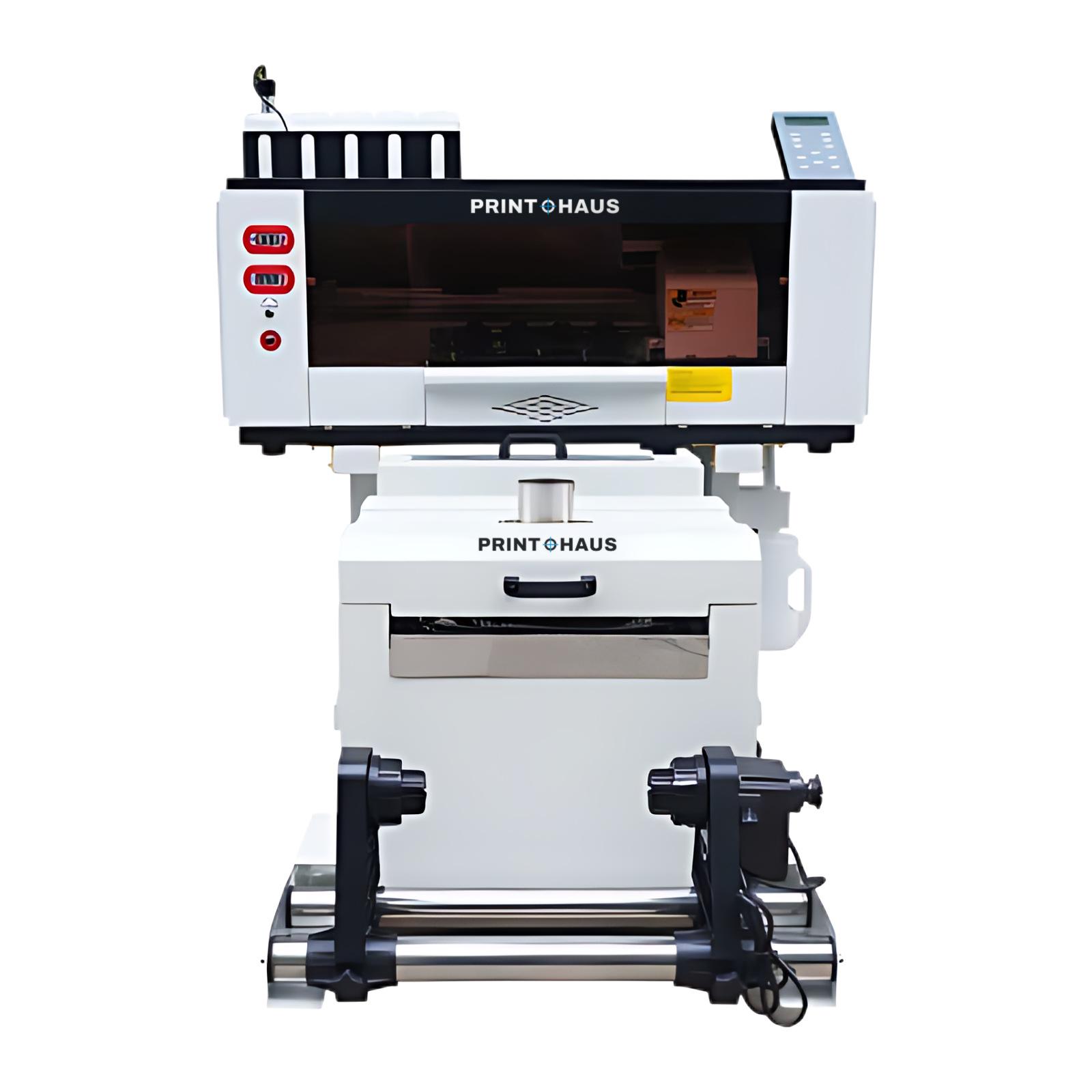
DTF (direct-to-film) is one of the easiest print businesses to start. There are no screens to burn, no minimum runs and no pre-treatment. It prints on cotton, polyester and blends, light or dark. A DTF printer, a powder shaker and a heat press can turn a garage into a working print shop in a few weeks. Here is what you need, what it costs and how to get your first orders.
The equipment you need
| Item | What it does | Typical cost |
|---|---|---|
| DTF printer | Prints CMYK plus white onto PET film | $5,000–$20,000 |
| Powder shaker and dryer | Applies, shakes off and cures hot-melt powder | Often bundled with the printer |
| Heat press | Transfers the print from film to the garment | $500–$2,000 |
| Computer and RIP software | Prepares artwork and controls the white layer | Often included with the printer |
| Ink, film and powder | The consumables | $500–$1,000 to start |
| Air filter | Extracts fumes from curing | Often bundled with the shaker |
A purpose-built DTF printer with industrial Epson i3200 heads and an inline shaker is the right start for a business. Converted desktop printers are cheaper, but they clog more often and print much slower.
Which printer to start with
For a brand or small shop printing its own garments, a 12-inch line is enough. The PH-DTF302 prints up to 75 ft² an hour on 11.8-inch film with two i3200 heads. It comes with a shaker and an air filter, delivered for $7,490. A version with Epson F1080 heads costs $5,490 and prints up to 48 ft² an hour.
If you plan to sell gang sheets to other businesses, start at 24 inches. The PH-DTF602 prints up to 150 ft² an hour with an inline DF-700W shaker for $11,490 delivered. That is enough to keep more than one heat press busy. Transfer businesses running long shifts move up to the six-head, nine-colour PH-DTF606 at $22,990.
Not sure which width fits? Our 12-inch vs 24-inch DTF printer comparison walks through it.
Space, power and environment
- Floor space: the 12-inch printer and shaker fit in about 6 × 5 ft of working space. A 24-inch line needs about 10 × 6 ft plus room to load film.
- Power: most DTF lines run on 220V. If your space only has standard 110V outlets, an electrician can add a 220V circuit like a dryer outlet.
- Climate: keep the room at 64–86 °F and 40–60% humidity. White ink and film behave best in a stable room.
- Ventilation: curing powder gives off fumes. Use the air filter and keep the room ventilated.
What it costs to run
Ink, film and powder for a full-front print usually come to well under a dollar. Your real costs are labour, garments and the hours the printer sits idle. Our DTF printer cost guide breaks down running costs per print.
How to price your work
Most US DTF businesses sell in two ways:
- Gang sheets by the foot or by the sheet to other shops, Etsy sellers and makers who own a heat press but no printer.
- Finished garments: team shirts, events, merch for local businesses and brands, priced per piece with a setup-free minimum of one.
Look at what nearby gang-sheet sellers charge, then price on speed and service rather than undercutting. Same-day turnaround and help with artwork win repeat customers.
Finding your first customers
- Local sports clubs, schools, churches and events that need short runs.
- Small apparel brands that are tired of screen-print minimums.
- Other decorators and crafters who buy transfers online. Sell gang sheets on your website and on marketplaces.
- Your own designs, sold online, so the printer works between custom orders.
Keep the printer healthy
DTF white ink settles, so the printer has to print or circulate every day. Machines with automatic white-ink circulation do most of this for you, but a daily nozzle check and a weekly clean are what keep heads printing for years. See our DTF printer maintenance guide.
Getting started with Printohaus
Every Printohaus price for the US includes sea freight to your door, import duty, online setup and operator training. Each machine has a 12-month warranty and remote video support for as long as you own it. Not sure where to start? Browse the DTF printers or ask us in the chat what you plan to print and how many a day.